








When I first started looking into low cost fitness plans for winter home workouts, I had $30 to spare and a living room barely big enough to do a burpee without kicking the coffee table. It was January, freezing outside, and my gym membership had just expired. I didn’t renew it. Instead, I built a workout routine at home that cost less than two weeks of that membership. Three winters later, I’m in better shape than I ever was at the gym. Here’s exactly how I made it work and how you can too.
1. Start With Bodyweight-Only Programs (They’re Free)
You don’t need a single piece of equipment to build a solid winter workout routine. Bodyweight programs are the most overlooked resource out there, and most of them cost absolutely nothing.
I started with the Nike Training Club app, which offers full guided workouts for free. Darebee.com is another goldmine with hundreds of printable workout plans organized by difficulty. I printed a 30-day program, taped it to my fridge, and checked off each day with a marker. That simple accountability trick kept me going through all of February.
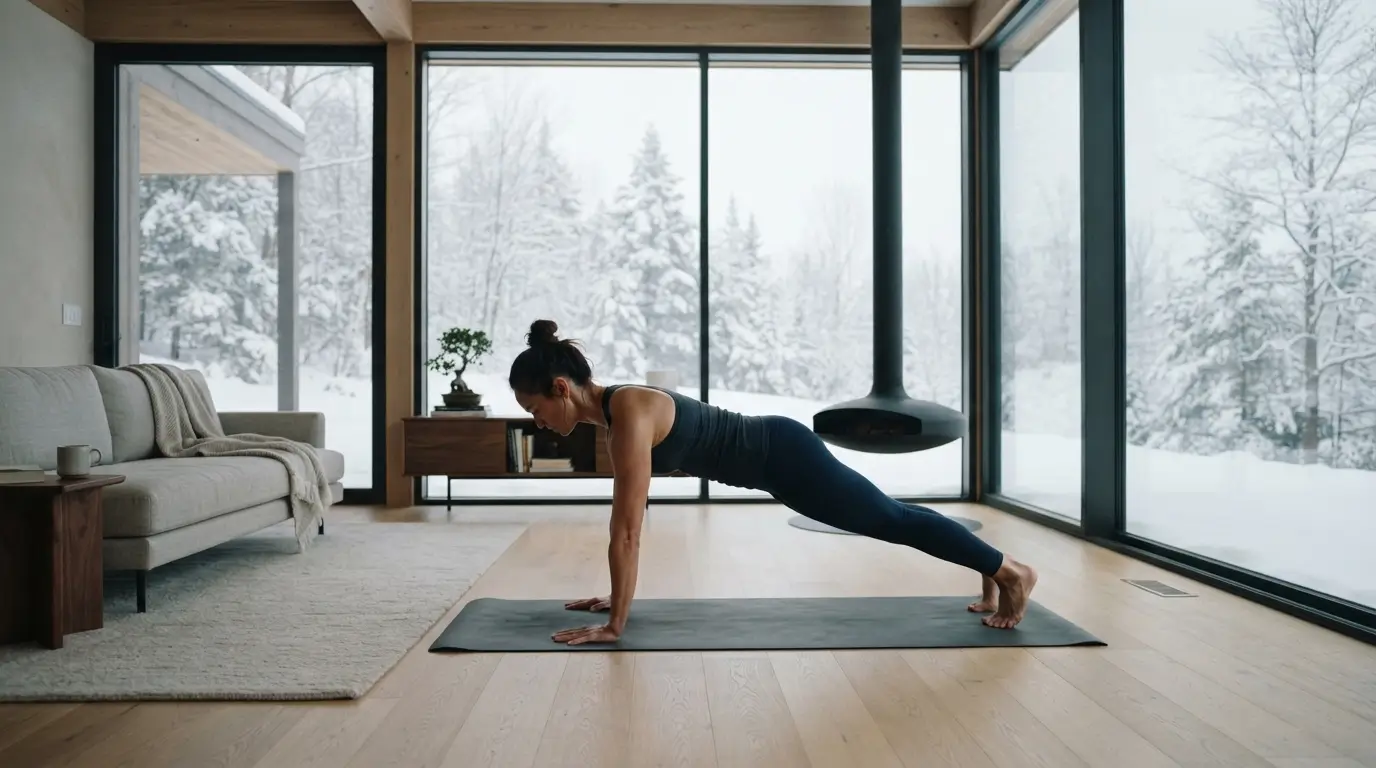
The beauty of bodyweight training is that it scales with you. Push-ups, squats, lunges, planks, mountain climbers. They never stop being effective if you keep adding reps or slowing the tempo. And you can do all of it in socks on your living room floor while it’s snowing outside.
2. Grab a Set of Resistance Bands for Under $15
If I had to pick one piece of equipment that gave me the most bang for my buck, resistance bands win every time. A solid set from brands like Fit Simplify or SPRI runs about $10 to $15 on Amazon. That’s it. One purchase covers your entire winter.
Bands let you mimic almost any gym exercise. Banded squats, lateral walks, bicep curls, overhead presses, seated rows. I even anchor mine over my door for lat pulldowns. The variety is ridiculous for something that fits in a drawer.
Also Read: Top Rated Fitness Routines for Stress Relief Seekers 2026
They’re also perfect for warming up on cold mornings when your muscles feel stiff and tight. Five minutes of banded stretches before a workout makes a real difference when your house is 62 degrees because you’re trying to save on heating too.
3. Build a Routine Around YouTube Trainers You Actually Like
YouTube is the free personal trainer most people ignore. The trick is finding someone whose style matches your energy, because if you hate the trainer’s vibe, you’ll quit by week two.
Here are a few I’ve personally stuck with across multiple winters. Sydney Cummings posts full-length daily workouts with zero equipment required. Caroline Girvan offers intense structured programs if you want something that feels more like a progressive plan. Grow With Jo keeps things fun and danceable for days when motivation is low.
I rotate between these three depending on my mood. Some mornings I want to sweat hard. Other mornings I just want to move enough to feel human. Having options costs nothing and prevents the staleness that kills most home workout habits.
4. Use Household Items as Makeshift Weights
Before you spend money on dumbbells, look around your house. I used two gallon jugs of water as weights for an entire month. Each one weighs about 8.5 pounds, and they have handles built right in.
A loaded backpack works perfectly for weighted squats and lunges. I stuffed mine with books until it hit around 20 pounds and did goblet squats holding it against my chest. A heavy laundry detergent bottle with a handle makes a decent kettlebell substitute for swings and deadlifts.
Is it a little ridiculous looking? Sure. Does it work? Absolutely. Muscles don’t care whether you’re lifting a chrome dumbbell or a jug of Tide. Resistance is resistance. Save your money for something that actually requires a real purchase.
5. Pick Up Secondhand Dumbbells or a Kettlebell
If you do want real weights, never buy them new at full retail price. Facebook Marketplace, Craigslist, and local Buy Nothing groups are flooded with barely used fitness equipment every January and February. People buy it with New Year’s energy and sell it by March.
I picked up a pair of 15-pound dumbbells for $12 and a 25-pound kettlebell for $18 last winter. All from people within a 10-minute drive. The kettlebell alone opened up swings, Turkish get-ups, cleans, and goblet squats, basically an entire gym’s worth of movement patterns in one compact piece of iron.
Check secondhand listings every few days during January. The deals are genuinely absurd.
6. Follow a Structured Low Cost Fitness Plan for Winter Home Workouts
Random workouts are better than nothing, but a structured plan keeps you progressing. Without a plan, I noticed I kept doing the same exercises at the same intensity and hit a plateau by mid-February.
Here’s a simple weekly structure that worked well for me and cost nothing:
- Monday: Upper body (push-ups, banded rows, overhead press with jugs)
- Tuesday: Lower body (squats, lunges, glute bridges, banded lateral walks)
- Wednesday: Active recovery or yoga (Yoga With Adriene on YouTube is free and excellent)
- Thursday: Full body circuit (mix of everything, high intensity, timed intervals)
- Friday: Upper body variation (different grips, tempos, and angles)
- Saturday: Lower body variation plus core work
- Sunday: Rest or light stretching
I tracked everything in a $1 notebook from the dollar store. Date, exercises, reps, how I felt. Looking back through those pages three months later and seeing the progression was more motivating than any app notification.
7. Don’t Sleep on Jump Ropes
A basic jump rope costs $5 to $8 and delivers one of the most efficient cardio workouts you can do indoors. Ten minutes of jumping rope burns more calories than 30 minutes of walking and gets your heart rate up fast.
I keep mine by the front door and use it as a warm-up before strength work or as a standalone cardio session on days when I’m short on time. If you have low ceilings, take it to the garage or even a covered patio. Works fine in cold weather as long as you’re moving.
The coordination challenge also keeps your brain engaged, which matters during winter when everything feels a little duller and slower than usual.
8. Set Up a Dedicated Workout Space (Even If It’s Tiny)
This one isn’t about spending money. It’s about psychology. When I cleared a 6-by-4-foot patch of living room floor and designated it as my workout spot, my consistency jumped immediately.
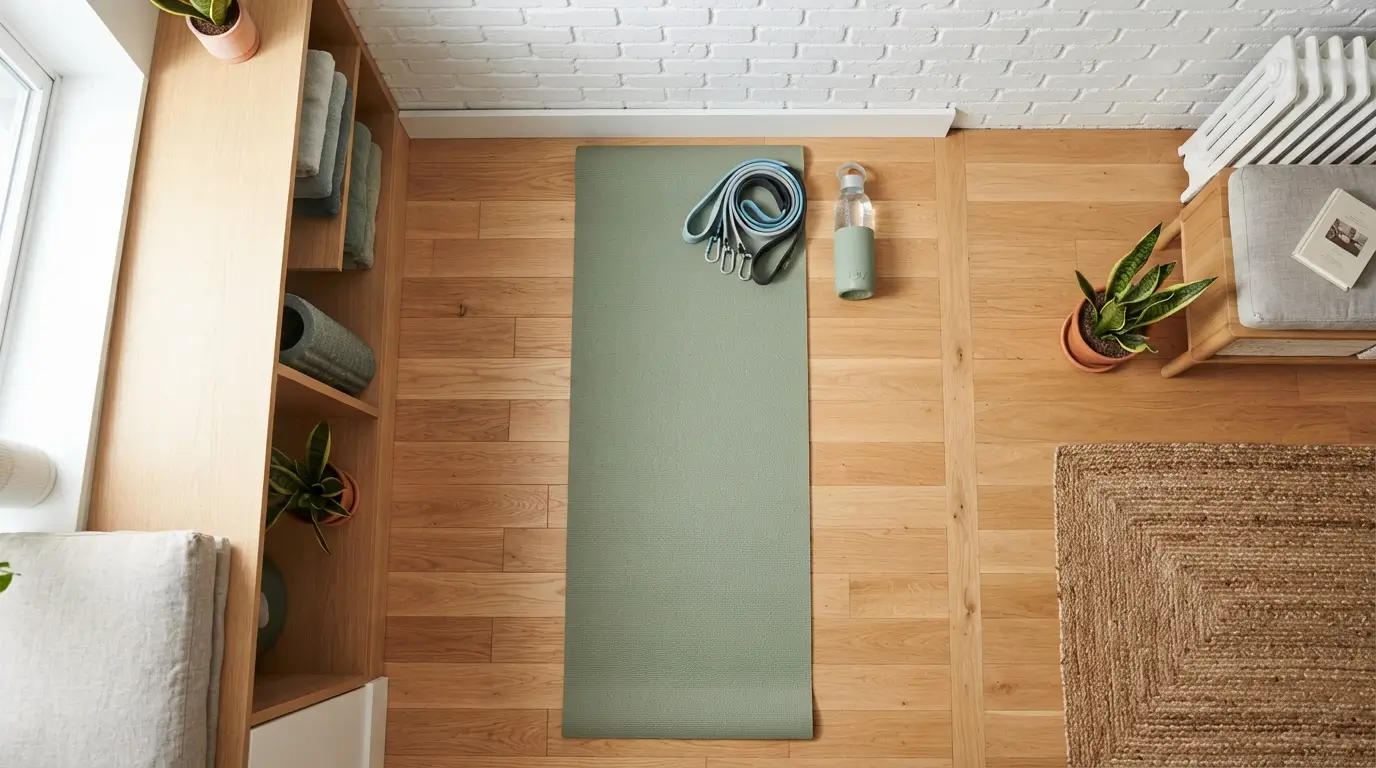
I rolled out a basic yoga mat I already owned (you can grab one at Five Below for $5 if you need one) and kept my resistance bands and water jugs right next to it. No setup time. No excuses about moving furniture. I’d wake up, see the mat, and get started.
Winter makes everything harder. Dark mornings, cold air, the gravitational pull of the couch. Removing even one small barrier between you and your workout makes a measurable difference in whether you actually do it.
9. Layer In Free Mobility and Stretching Work
Cold weather tightens everything up. Your hips, your shoulders, your lower back, all of it gets stiffer when temperatures drop. Adding 10 to 15 minutes of daily mobility work costs zero dollars and prevents the nagging aches that make people quit.
I use the GMB Fitness YouTube channel for mobility flows and Tom Merrick’s stretching routines for deeper flexibility work. Both are free and genuinely well-taught. On rest days, I do a 20-minute full body stretch instead of sitting on the couch, and I always feel better afterward.
This is the stuff nobody thinks about when building a home workout plan, but it’s honestly what kept me injury-free and moving well through three consecutive winters of training in my living room.
10. Track Your Progress Without Expensive Apps
You don’t need a $15-per-month fitness app to stay on track. A simple notebook works better, IMO, because the physical act of writing things down forces you to pay attention to what you’re doing.
Write the date, the workout, the exercises, the reps or time for each, and a one-line note about how it felt. That’s it. After four weeks, flip back and compare. You’ll see concrete progress, and that visual proof is what keeps you going when the couch is calling.
Also Read: Budget Friendly Workout Routines for Mental Health 2026
If you prefer digital tracking, Google Sheets works perfectly and costs nothing. I’ve used both methods and keep coming back to the notebook because it lives right next to my workout mat and takes five seconds to update.
Frequently Asked Questions
Can I really get a good workout at home without any equipment?
Absolutely. Bodyweight exercises like push-ups, squats, lunges, and burpees build real strength and endurance. I went my entire first winter with zero equipment and still saw visible changes in my arms and legs by March. Progressive overload through added reps, slower tempos, and harder variations keeps things challenging without spending a dime.
What’s the cheapest way to start a home workout routine in winter?
Pick a free bodyweight program from Darebee.com or YouTube, clear a small space in your home, and just start. You literally need zero dollars to begin. If you want one upgrade, grab a set of resistance bands for under $15. That combination covers strength, cardio, and flexibility for an entire season.
How do I stay motivated to work out at home when it’s cold and dark?
Set up a permanent workout spot so there’s no friction. Follow a structured weekly plan so you’re not guessing what to do each day. And track your workouts in a notebook. Seeing your own progress on paper is honestly the most powerful motivator I’ve found, way more effective than any app badge or streak counter.
Are low cost fitness plans for winter home workouts effective for weight loss?
They absolutely can be. Weight loss comes down to consistent movement plus reasonable nutrition. A structured home workout plan that includes strength training and cardio intervals, even using only bodyweight and resistance bands, burns plenty of calories and builds the muscle that keeps your metabolism running higher throughout the day.
How much space do I need for home workouts?
A 6-by-4-foot area works for most bodyweight and resistance band exercises. That’s roughly the size of a yoga mat with a little breathing room on each side. I work out in my living room between the couch and the TV stand, and I’ve never needed more space than that for any exercise in my routine.
Conclusion
Staying fit through winter doesn’t require a gym membership, fancy equipment, or a big budget. A clear floor, a few free resources, and a little consistency go further than most people expect. What’s your go-to move for staying active when it’s freezing outside?