








When I first started looking for beginner friendly outdoor exercise routines for trail runners, I was overwhelmed. Every article assumed I already had a base of fitness I simply didn’t have. I’d huff up a small hill and wonder if something was wrong with me. Turns out, I just needed the right routines designed for people starting from zero on uneven ground. These are the ones that got me trail ready, tested on my own shaky legs.
Why Standard Running Plans Don’t Work on Trails
Most running programs assume flat pavement. Trails throw roots, rocks, elevation changes, and soft ground at you all at once. Your ankles, knees, and stabilizer muscles need a completely different kind of prep.
I learned this the hard way when I followed a couch-to-5K plan and then tried a local trail loop. My ankles felt like wet noodles by mile one. Pavement running builds endurance, sure, but it doesn’t train the lateral stability or the quick-reaction balance that trails demand. You need routines that prepare your body for unpredictable terrain, not just forward motion.
Trail running also taxes your glutes and hip flexors way more than road running. The constant micro-adjustments your body makes on uneven ground recruit muscles that flat surfaces basically ignore. If you skip building those up, you’ll either get injured or just feel miserable out there.
Building Your Base: The Walk-Run Method for Trails
Before you worry about speed or distance, you need a base. The walk-run method is the single best way to build one without wrecking yourself.
Here’s how I started: I picked a local trail that was about 1.5 miles with gentle elevation. I walked for three minutes, then jogged for one minute. That’s it. I repeated that cycle for 30 minutes, three days a week. After two weeks, I shifted to two minutes walking, two minutes jogging. By week six, I was jogging more than walking.
Also Read: Affordable Outdoor Workout Plans for Backyard Fitness 2026
The key is keeping your ego in check. I wanted to run the whole trail so badly, but pushing too fast on uneven ground is a fast track to a rolled ankle or shin splints. The Garmin Forerunner 55 was a huge help here because I could set interval alerts so I didn’t have to keep checking my watch. Just listen for the beep and switch.

Adjusting the Walk-Run Ratio for Elevation
If your trail has real hills, don’t be afraid to walk every single uphill section. Seriously. Even experienced trail runners power hike steep climbs. When you’re starting out, treat all uphills as walk segments regardless of your interval timer. Save your running for flat sections and gentle downhills. Your heart rate will thank you.
Beginner Friendly Outdoor Exercise Routines for Trail Runners: Strength Work You Can Do Outside
You don’t need a gym. Some of the best strength work for trail running happens right outside, using nothing but your body weight and whatever terrain you can find.
I do this circuit twice a week, usually at a park or trailhead before a short run. It takes about 20 minutes and targets everything trails punish the most.
- Single-leg squats onto a bench or low rock (8 per side)
- Walking lunges on a grassy slope (12 total)
- Lateral step-ups on a curb or log (10 per side)
- Calf raises on a trail edge or step (15 reps)
- Side plank holds (30 seconds per side)
The single-leg squats are the most important exercise on this list. Trails constantly put you on one foot at a time, and most beginners have a massive strength imbalance between their left and right legs. I certainly did. My left leg was noticeably weaker, and it showed up as knee pain on longer runs until I fixed it.
Do this circuit before your run, not after. Your muscles are fresh, your form stays clean, and you get the activation benefits that make the run itself feel smoother.
Trail-Specific Balance Drills That Actually Help
Balance work sounds boring until you face-plant on a root you didn’t see. Then it becomes very interesting.
My favorite drill is dead simple: stand on one foot for 30 seconds with your eyes closed. Try it right now. Harder than you expected, right? That wobble you feel is your proprioceptive system working overtime, and that’s exactly the system trails demand from you constantly.
I also practice what I call “rock hopping” in my backyard. I set up a few stepping stones at irregular intervals and practice moving across them quickly without pausing. It trains your brain to pick foot placements fast, which is essentially what you’re doing on a rocky trail at speed.
Another great one: walk along a fallen log or a curb like a balance beam. Go forward, then backward, then try it with your eyes focused on a point ahead instead of looking down at your feet. Trail runners who stare at the ground right in front of them trip more often than those who scan a few feet ahead. This drill builds that habit.
Core Work That Translates to Trail Performance
Your core keeps you upright when the trail tries to throw you sideways. A strong core also protects your lower back on long descents, which is something I wish someone had told me before my first 5-mile trail run left me hobbling for three days.
Skip the crunches. They don’t do much for trail runners. Instead, focus on anti-rotation and stability exercises.
Dead bugs are my go-to. Lie on your back, extend opposite arm and leg while keeping your lower back pressed into the ground. Three sets of 10 per side. It sounds easy until you actually keep your back flat the entire time.
Bird dogs work the same concept from a hands-and-knees position. Planks are fine too, but I prefer moving exercises because trails don’t ask you to hold still. They ask you to stay stable while everything else is moving.
I do core work on my rest days, usually just 10 to 15 minutes while watching something on my phone. It doesn’t need to be a whole production. Consistency beats intensity here.
Mobility Work: The Boring Stuff That Prevents Injuries
I’ll be honest, I skipped mobility work for my first six months of trail running. Then my IT band tightened up so badly I couldn’t run for three weeks. Don’t be like me.
Spend 10 minutes after each run on these:
- Hip flexor stretch (90/90 position, 45 seconds per side)
- Pigeon pose for glutes (60 seconds per side)
- Calf stretch against a wall or tree (30 seconds per side)
- Ankle circles (10 each direction, both feet)
The ankle circles feel pointless but they genuinely help. Trail runners need ankle mobility that road runners simply don’t, and tight ankles are a sprain waiting to happen. A foam roller like the TriggerPoint GRID works great on your calves and IT band if you want to add that in. I keep one in my car so I can roll out right at the trailhead after a run.
Building a Weekly Schedule That Won’t Burn You Out
When you’re starting out, three days a week on trails is plenty. Your joints and connective tissues need time to adapt to uneven surfaces, and that adaptation happens during rest, not during the run itself.
Here’s the weekly structure I used for my first three months:
Monday: Strength circuit (20 minutes) plus a short trail walk-run (25 to 30 minutes)
Wednesday: Easy trail walk-run (30 minutes) plus mobility work after
Friday: Strength circuit (20 minutes) plus trail walk-run (30 minutes)
Saturday or Sunday: Longer trail walk at an easy pace (45 to 60 minutes), no pressure to run
The other days are full rest or light activity like cycling or swimming. I made the mistake of adding a fourth trail day too soon and my knees started aching within two weeks. Pulled back to three days and the pain disappeared. Your body is smarter than your ambition, so listen to it.
Progressing Without Overdoing It
The 10 percent rule works well here: increase your total weekly trail time by no more than 10 percent each week. If you’re doing 90 minutes total this week, next week should cap at about 99 minutes.
After six to eight weeks of the walk-run method, you can start shifting toward continuous running on easier trails. Keep the hillier, more technical trails for your walk-run days. There’s no rule that says every run has to be the same format.
Also Read: Top Outdoor Fitness Programs for Camping Enthusiasts 2026
I also found that swapping one trail day for a road run actually helped my overall endurance without beating up my legs as much. The flat surface gives your stabilizer muscles a break while still building your cardiovascular base. IMO, mixing surfaces is one of the smartest things a beginner trail runner can do.
Gear That Makes Beginner Routines Easier
You don’t need much, but a few things genuinely help when you’re following beginner friendly outdoor exercise routines for trail runners.
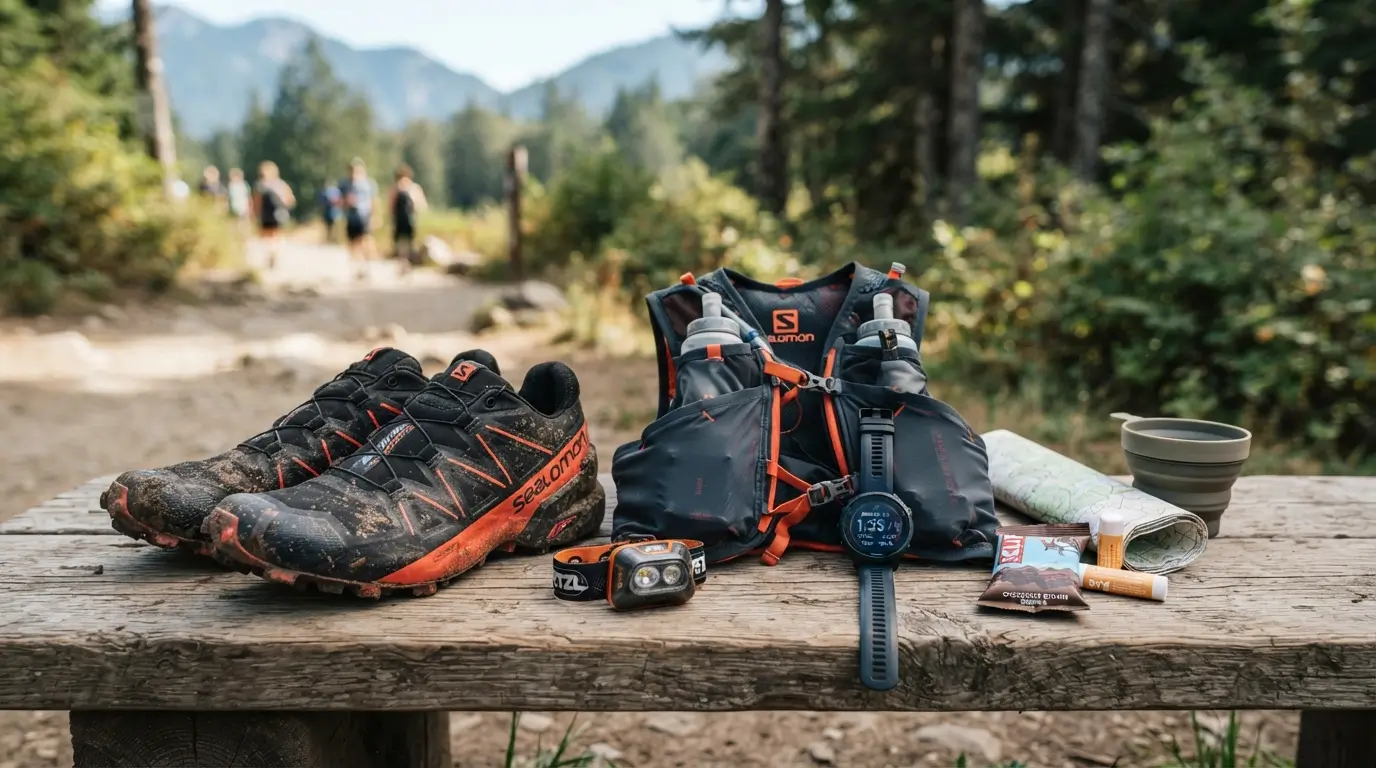
Trail shoes are non-negotiable. Road running shoes on trails are a disaster. I started with the Altra Lone Peak and loved the wide toe box and zero drop, but the Salomon Speedcross and Brooks Cascadia are both solid choices too. Go to a running store and try a few on. What fits your foot matters more than any review.
A hydration vest like the Salomon Active Skin 4 makes longer outings way more comfortable than carrying a handheld bottle. And a simple running watch with interval timer capability saves you from constantly checking your phone during walk-run sessions.
Skip the compression sleeves, fancy gaiters, and trekking poles for now. You can always add gear later once you know what you actually need.
FAQs
How many days a week should a beginner trail runner exercise?
Three days of trail running or walk-running is a solid starting point. Add one or two days of strength and mobility work on non-running days. Your connective tissues, especially tendons and ligaments, need more recovery time on trails than on roads because of the constant stabilization work. Build up to four trail days only after you’ve been consistent for at least six to eight weeks.
What outdoor exercises help most for trail running?
Single-leg squats, walking lunges on slopes, and lateral step-ups build the strength trails demand most. Balance drills like standing on one foot with eyes closed train your proprioception. Core exercises like dead bugs and bird dogs keep you stable on uneven ground. Do these outside at a park or trailhead and you’ll feel the difference within a few weeks.
Can I trail run if I’ve never run before?
Absolutely. The walk-run method exists for exactly this reason. Start with mostly walking and short jogging intervals on a gentle, well-maintained trail. Your body adapts surprisingly fast when you give it consistent, moderate stimulus. I went from zero running background to comfortably running 5 miles of trail in about four months using this approach.
Do I need trail-specific shoes as a beginner?
Yes. Trail shoes have aggressive tread patterns and stiffer midsoles that protect your feet on rocks and roots. Road shoes are slippery on dirt and offer almost no protection from sharp objects underfoot. You don’t need the most expensive pair, but you do need actual trail shoes. The grip difference alone is worth it, especially on wet or loose terrain.
What are the best beginner friendly outdoor exercise routines for trail runners who are out of shape?
Start with the walk-run method at three minutes walking to one minute jogging. Pair that with bodyweight strength circuits focusing on single-leg movements and core stability. Keep total weekly trail time under 90 minutes for the first month. Progress slowly. The combination of gradual running increases and targeted strength work builds fitness without the injury risk that comes from doing too much too fast.
Conclusion
Trail running rewards patience more than almost any other sport I’ve tried. The routines that got me from completely out of shape to comfortably running trails weren’t complicated, they were consistent. Start small, build your legs and your balance, and let the trails teach you the rest. What trail are you eyeing for your first run?