







I stumbled into budget friendly workout routines for mental health improvement the same way most people do: broke, anxious, and desperate for something that didn’t cost $60 a month. My therapist kept telling me to exercise. My bank account kept telling me to stay home. Turns out, the best workouts for your brain don’t require a single piece of fancy equipment or a trendy studio membership. They just require you showing up for yourself, even when your brain is screaming at you to stay in bed.
Why Exercise Matters So Much for Mental Health
Your brain on exercise is a completely different machine. When you move your body, it releases endorphins, serotonin, and dopamine, the exact chemicals that anxiety and depression try to steal from you. I noticed it within my first week of consistent movement. Not a dramatic overnight shift, but a subtle loosening of the tightness I’d been carrying in my chest for months.
Research backs this up hard. A 2023 meta-analysis published in the British Journal of Sports Medicine found that exercise was 1.5 times more effective than counseling or leading medications for reducing symptoms of depression, anxiety, and psychological distress. That’s not a knock on therapy or medication. I use both. But it tells you just how powerful movement is.
The problem? Most people assume “exercise” means an expensive gym, a personal trainer, or some boutique fitness class with mood lighting and overpriced smoothies. It doesn’t. The workouts that helped my mental health the most cost me literally nothing.
1. Walking, the Most Underrated Mental Health Workout
I used to roll my eyes at the suggestion of walking. It felt too simple, too boring, too “not a real workout.” Then I started walking 30 minutes every morning, and within two weeks, my morning anxiety dropped noticeably. I stopped waking up with that pit-in-my-stomach dread.
Also Read: Easy Workout Plans for Improving Sleep and Mood 2026
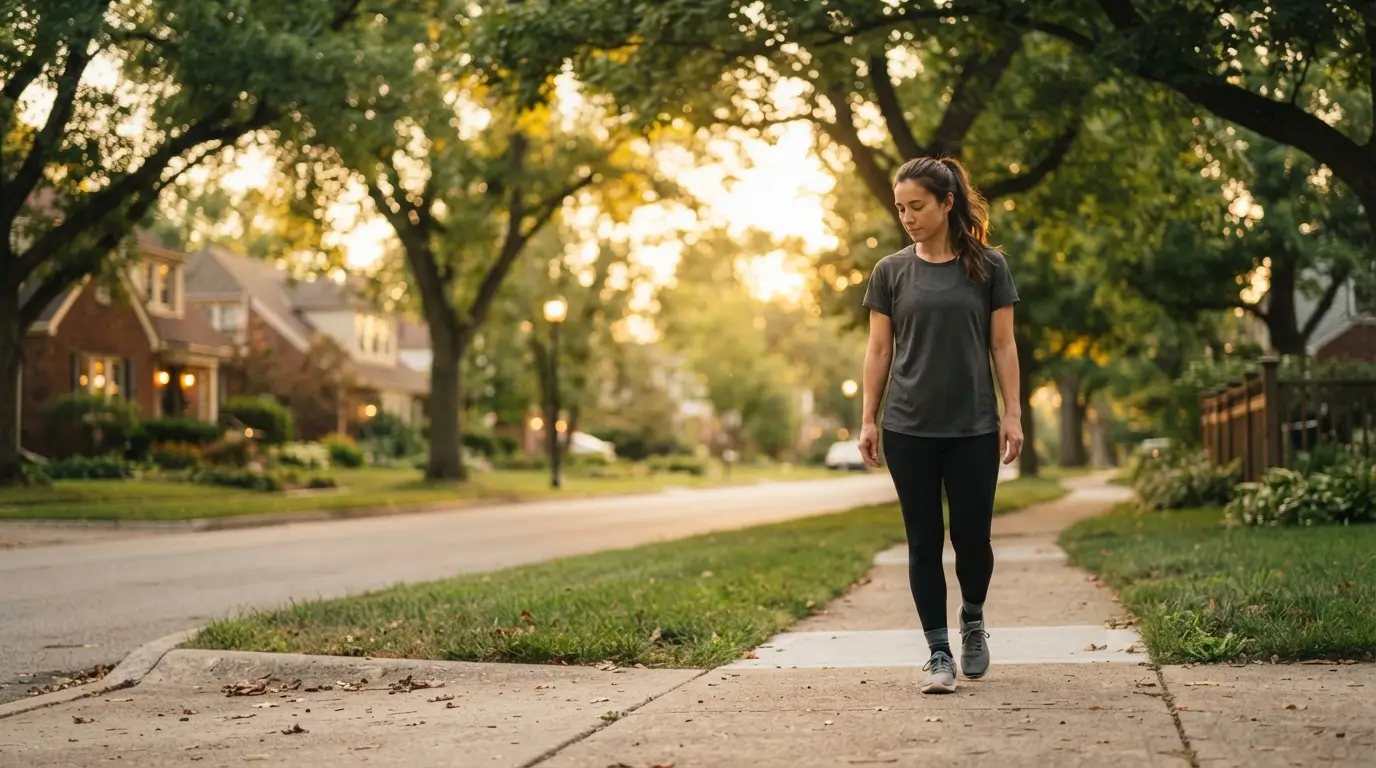
Walking outside is especially powerful. A Stanford study found that people who walked in nature for 90 minutes showed decreased activity in the prefrontal cortex region associated with rumination, that obsessive negative self-talk loop. You don’t need a forest trail either. A neighborhood sidewalk with a few trees works. I walk the same boring loop around my apartment complex most days, and it still works. The key is consistency, not scenery. Pair it with a podcast or music you love, and suddenly it stops feeling like exercise and starts feeling like the best part of your day.
Cost: Free. You just need shoes.
2. YouTube Home Workouts That Actually Deliver
YouTube completely changed my fitness life, and I’m not being dramatic. Channels like Yoga With Adriene, GROWWITHJO, and MadFit offer thousands of free workout videos ranging from 10 minutes to a full hour. No equipment needed for most of them.
I started with Yoga With Adriene’s “30 Days of Yoga” series during a particularly rough winter. Some days I barely moved through the poses. Some days I cried on my mat. But I kept showing up, and by day 15, I felt calmer and more grounded than I had in months. For higher intensity, GROWWITHJO’s walking workouts are perfect for days when the weather is terrible but you still need to move. MadFit’s apartment-friendly routines won’t annoy your downstairs neighbors either, which is a real concern when you live in a building with thin floors.
The beauty of YouTube workouts is that you control the pace, the difficulty, and the schedule. No commute, no judgment, no monthly fee.
Cost: Free with an internet connection.
3. Bodyweight Strength Training at Home
Pushups, squats, lunges, planks, glute bridges. These moves have been around forever because they work. Strength training specifically has shown impressive results for mental health. A 2018 study in JAMA Psychiatry found that resistance exercise training significantly reduced depressive symptoms, regardless of health status.
I built a simple routine: 3 sets of 10 pushups (modified at first, no shame), 3 sets of 15 squats, 3 sets of 10 lunges per leg, and a 30-second plank. The whole thing takes about 20 minutes. I do it three times a week. What surprised me was the confidence boost. Getting stronger physically made me feel stronger mentally. Watching myself go from shaky modified pushups to full ones gave me tangible proof that I could improve at something, and that bled into every other area of my life.
If you want structure without paying for a program, the Nike Training Club app offers free bodyweight plans. The guided workouts take the guesswork out completely.
Cost: Free.
4. Running on a Shoestring Budget
Running gets a bad reputation. People either love it obsessively or claim they’d rather do anything else. I was firmly in the second camp until I tried the Couch to 5K (C25K) program, which eases you into running so gradually that you barely notice you’re doing it.
The mental health benefits of running are well-documented. It triggers what researchers call the “runner’s high,” a genuine neurochemical response involving endocannabinoids (your body’s natural version of cannabis compounds). I didn’t feel this high on my first run. Or my fifth. But around week four, I finished a 20-minute jog and felt genuinely euphoric for the rest of the afternoon. It was wild.
You don’t need expensive gear. A decent pair of running shoes is the only real investment, and brands like ASICS and New Balance regularly have models under $60. The free C25K app provides the structure. Hit the sidewalk three times a week, and you’ve got yourself a budget friendly workout routine for mental health improvement that punches way above its price tag.
Cost: $0 to $60 for shoes.
5. Dance Workouts for When Everything Feels Heavy
On my worst mental health days, the last thing I want to do is anything that looks or feels like traditional exercise. Those are dance workout days. There’s something about moving to music that bypasses the resistance my depressed brain puts up against “working out.”
305 Fitness has free dance cardio videos on YouTube. The Fitness Marshall makes routines to popular songs that are genuinely fun. I’ve done entire 30-minute dance sessions in my kitchen wearing socks on the tile floor. Not graceful. Not pretty. But absolutely effective.
A 2024 meta-analysis in the British Medical Journal specifically highlighted dance as the most effective exercise for treating depression, outperforming even running and walking. The combination of music, movement, social engagement (even virtually), and creative expression creates a uniquely powerful mental health cocktail. On days when the idea of a “workout” makes you want to crawl back under the covers, just put on a song and move however your body wants to move.
Cost: Free.
6. Community Recreation Centers and Pay-What-You-Can Options
Most cities and towns have community recreation centers with shockingly affordable rates that barely anyone takes advantage of. My local rec center charges $3 per visit, and they have a pool, a weight room, basketball courts, and group fitness classes. Three bucks. That’s less than a coffee.
Many YMCAs offer financial assistance programs where you pay based on income. I used this when I was freelancing and barely scraping by. They never made me feel weird about it. Some cities also run free outdoor fitness classes in parks during warmer months. Austin, Denver, New York, and Chicago all have programs like this.
If you’re a student, your campus gym is almost certainly included in your tuition. I wasted two entire years of college not knowing my university gym was free. Don’t make my mistake. Check what’s already available to you before you assume everything costs money. You’d be surprised.
Cost: Free to $5 per visit in most cases.
7. Outdoor Bodyweight Circuits Using Parks and Playgrounds
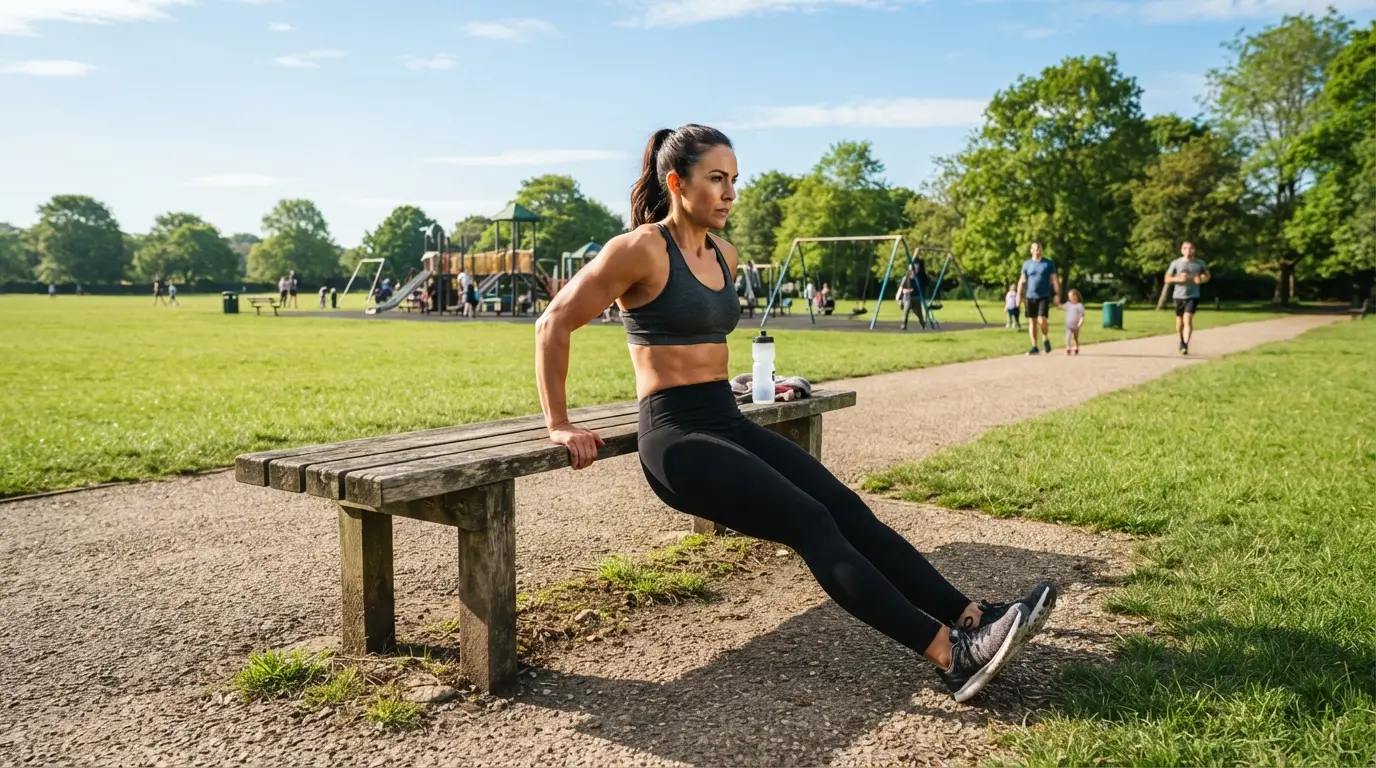
Public parks are free gyms hiding in plain sight. Benches work for step-ups, tricep dips, and incline pushups. Monkey bars are pull-up bars. Open grass is perfect for burpees, mountain climbers, and bear crawls. I built an entire 30-minute circuit using nothing but a park bench and a patch of grass near my apartment.
Here’s a sample routine I still use:
- 10 bench step-ups per leg
- 10 tricep dips off the bench
- 10 incline pushups on the bench
- 20 jumping jacks on the grass
- 30-second plank
Three rounds of that, with a minute rest between rounds, and you’re done. The fresh air adds an extra mental health layer that indoor workouts can’t replicate. Sunlight exposure helps regulate your circadian rhythm, which directly impacts sleep quality, which directly impacts mood. It’s a chain reaction, and it all starts with just getting outside.
Building a Weekly Schedule That Supports Your Mental Health
Having a plan matters more than having the perfect workout. When I was at my lowest, decision fatigue was real. I couldn’t decide what to eat for dinner, let alone figure out what exercise to do. So I built a dead-simple weekly schedule and removed the decisions entirely.
Here’s roughly what mine looks like:
- Monday: 30-minute walk + 10-minute Yoga With Adriene video
- Tuesday: Bodyweight strength circuit (20 minutes)
- Wednesday: Rest or gentle stretching
- Thursday: C25K run or dance workout (25 to 30 minutes)
- Friday: Park bench circuit (30 minutes)
- Saturday: Longer walk or hike if weather allows
- Sunday: Full rest
That entire week costs zero dollars. The key insight I learned the hard way is that consistency beats intensity every single time. A 15-minute walk you actually do is infinitely more valuable than a 60-minute HIIT session you keep putting off. Start embarrassingly small. I’m talking five minutes small. Build from there. Your brain will thank you way before your body catches up.
Budget Friendly Workout Routines for Mental Health Improvement Actually Work
I want to be real about something. Exercise alone did not fix my mental health. I still see a therapist. I still take medication. Movement is one tool in a larger toolbox. But it’s the tool I reach for every single day, and it’s the one that costs me the least while giving me the most immediate relief.
Also Read: Beginner Friendly Fitness Programs for Burnout Recovery Workers 2026
The research consistently shows that even modest amounts of physical activity, as little as 15 minutes of running or an hour of walking per week, can reduce the risk of major depression by 26%. You don’t need to train like an athlete. You just need to move your body regularly, in whatever way feels tolerable on your hardest days and enjoyable on your best ones.
Budget friendly workout routines for mental health improvement aren’t some compromise version of “real” fitness. They’re the version that most people can actually sustain, which makes them the most effective version that exists.
FAQs
How often should I exercise for mental health benefits?
Most research points to three to five sessions per week, but even one or two sessions make a measurable difference. I noticed improvements exercising just three times weekly for 20 to 30 minutes each time. Start with whatever feels manageable and build up. The World Health Organization recommends 150 minutes of moderate activity per week as a general target.
Can budget friendly workout routines replace therapy or medication?
No, and I wouldn’t recommend trying. Exercise is a powerful complement to professional treatment, not a substitute. I use all three together. If you’re dealing with clinical depression or anxiety, please talk to a mental health professional. Movement can absolutely accelerate your progress, but it works best alongside proper care.
What’s the best type of exercise specifically for anxiety?
Aerobic exercise like walking, running, and cycling tends to show the strongest results for anxiety reduction. Yoga also performs exceptionally well because it combines movement with breathwork and mindfulness. Personally, walking and yoga helped my anxiety far more than intense workouts did. Start with what feels calming rather than stressful.
How long before I notice mental health improvements from exercising?
I felt subtle shifts within the first week, mostly better sleep and slightly lower baseline anxiety. Research suggests measurable mood improvements can appear within two to four weeks of consistent exercise. Some people notice changes faster. The important thing is sticking with it long enough to let the cumulative effects build. Don’t judge it by day one.
What if I have zero motivation to work out on bad mental health days?
This is the hardest part, honestly. On those days, I tell myself I only have to do five minutes. Just five. Most of the time, once I start moving, I keep going. Sometimes I actually stop at five minutes, and that’s fine too. The goal on terrible days isn’t performance. It’s just breaking the stillness. A five-minute walk around the block still counts.
Conclusion
The best workout for your mental health is the one you’ll actually do, and it probably won’t cost you a dime. I spent years thinking I needed expensive memberships and gear before I could “properly” exercise my way to better mental health, and I was completely wrong. What workout has made the biggest difference for you?